
- News
- City News
- kolkata News
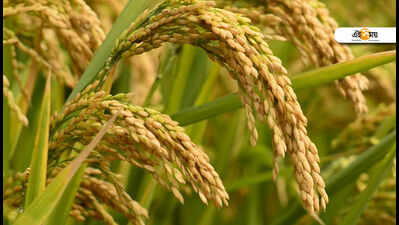
- High levels of 'arsenic' present in Bengal's favourite parboiled rice
Trending
This story is from August 13, 2018
High levels of 'arsenic' present in Bengal's favourite parboiled rice
This startling discovery has been made by the researchers of the School of Environmental Studies of Jadavpur University (JU).
(This story originally appeared in  on Aug 13, 2018)
KOLKATA. Rice is a staple in the eastern part of India and it is no secret that West Bengal prefers rice over chappatis. on Aug 13, 2018)And of all the types of available rice in the market, the citizens of Kolkata love parboiled rice (Seddho Chal) the most, even more than sunned rice (Atap Chal).
But little do they know that their favourite parboiled rice contains enough arsenic to cause trouble in a human body.

This startling discovery has been made by the researchers of the School of Environmental Studies of Jadavpur University (JU).
According to them, parboiled rice contains 205% more arsenic than sunned rice. Parboiled or Seddho rice is consumed by an average Bengali household not just in meals but is also used to prepare food items like parched rice. The researchers are worried about the outcome of this study.
West Bengal is one of the most arsenic contaminated states in the country. Out of 341 blocks in the state, 108 blocks have their ground water affected by arsenic.
Districts like North and South 24 pargana, Nadia, Hooghly, Bardhaman and Mursidabad are highly affected by arsenic.
Such elevated level of arsenic is affecting the cultivation of paddy. The rice exported from these areas reaches other parts of the state and is unwittingly consumed by the people.
Director of JU's School of Environmental Studies, Professor Tarit Roychoudhury said, “We have collected samples of sunned rice from the Deganga block and have found that every kg of the rice contains a minimum of 66 microgram arsenic. And in the same quantity of parboiled rice, 186 microgram arsenic is found.”
As 95% of the rice used in Bengal is parboiled, it poses more danger to its population than people from any other state.
Nilanjana Roychoudhury, who was associated with the project said, “To create sunned rice, the paddy grain does not need to be boiled but to create parboiled it has to boiled twice. And that boiling is usually done with arsenic contaminated water.”
Prof. Roychoudhry added, “When boiled with normal water, it was found that the level of arsenic in the rice goes down.”
As a result, the researchers a now suggested using arsenic free water for boiling the paddy grains to prepare parboiled rice.
Read this story in Bengali
End of Article
FOLLOW US ON SOCIAL MEDIA







Photostories

Hot Picks
TOP TRENDING
Popular Categories
Hot on the Web
Top Trends
PAK W vs SL W Live ScoreLiv Morgan Car CollectionSSC CGL Answer KeyTrichy School Bomb ThreatIsrael Hezbollah WarKerala Lottery ResultsRohit SharmaBrittany MahomesUP Police Constable ResultSeth Rollin Car CollectionTirupati Laddu CaseICC Women t20 World CupWomen's T20 World CupTop Management Colleges of IndiaT20 WC ScheduleWomen T20 World Cup Points TableLive Cricket Score
Trending Topics
Samantha Ruth PrabhuNavratri Colours 2024Navratri WishesHappy Navratri 2024 WishesNaga ChaitanyaDevara CollectionGOAT OTT ReleaseRajinikanthRajinikanth Health UpdateNavratri HistoryDevaraGovinda NewsDevara Movie ReviewHealthy RaitasSwatantrya Veer SavarkarColdplay India tour 2025Upcoming Smartphones In OctoberNavratri JewellerySony Bravia 55 inch 4k Ultra HD TVWordle Answer
Living and entertainment
Latest News
ICC Women’s T20 World Cup ninth-edition: Will India capture their first title? Key players, schedule, and where to watchMohammad Azharuddin skips ED summons in money laundering caseBeard Trimmer with Titanium Blades: Style Your Beard to Perfection with Unmatched SharpnessPower outages, water shortages emerge as Hurricane Helene smashes US' SoutheastEver wondered how business and corporate laws provide organisations with a competitive edge? Learn their nuances with IIM Calcutta5 must follow rules of Ayurveda to lose 5kg in 30 days'Was screaming, hitting him': 5-year-old Florida boy suffers cardiac arrest on Disney rollercoaster rideMicrosoft launches developer feedback program to address Xbox platform pain pointsKiara Advani shakes up the internet with her backless crochet and ruffle-dressTwo youths held captive in Manipur’s Kangpokpi released after week-long abductionNavarathri is all about inspiration and motivation: Shivani NarayananBank of America faces outage leading to zero balance glitches, hilarious memes flood social mediaWho is S Iswaran? Former Singapore minister of Indian origin sentenced to one year in prisonThere’s a huge angle of woman empowerment also in our story of Ram and Vaishnavi: Shiv SagarSSC CGL Answer Key 2024 released for Tier 1 exam, raise objections by Oct 6: Direct link hereGlobal Chess League 2024: Indians in action, teams, format, scoring system, timeCan mosquitoes spread HIV? Here’s what you need to knowSomen Mishra sets record straight on Alia Bhatt and Vasan Bala 'Jigra' controversy: We were DYING to get Alia on board
Copyright © 2024 Bennett, Coleman & Co. Ltd. All rights reserved. For reprint rights: Times Syndication Service